The Colours and Colour Terms of the Icelandic Sheepdog
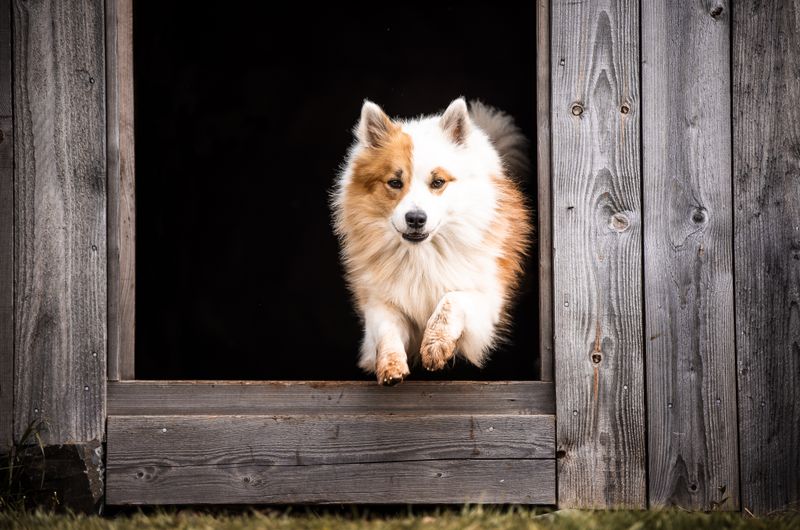
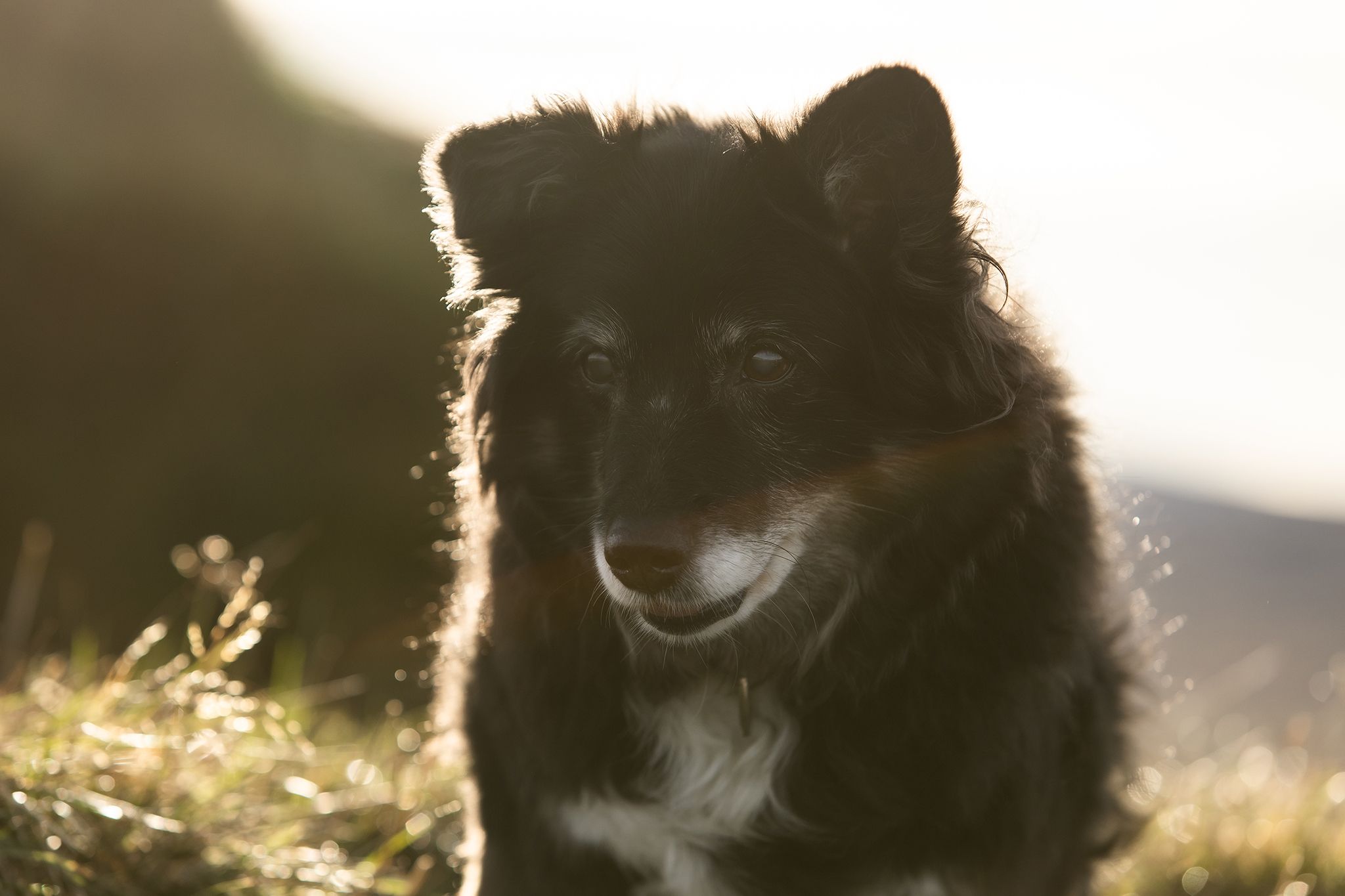
Last weekend, I held another photo session for my project on the colour varieties of the Icelandic Sheepdog. It was the last session, at least for now. Forty dogs have now been photographed, and the next step is to sort the photos by colour and get everything onto the website. That might sound straightforward, but it is not quite as simple as it seems. The [breed standard](https://www.dif.is/UmTegundina/289g05-en.pdf) lists the following colours: Fawn and red in various shades, ranging from cream to reddish brown Grey shaded Chocolate brown in various shades Black But then there are the markings, which make things a little more complicated. "White markings always accompany the main coat colour. The coat is very often lighter from the throat, along the underside of the body and back to the tip of the tail. This pattern is known in Icelandic as _botnótt_. A dark shading on the muzzle, sometimes accompanied by black hairs or black hair tips (_kolhært_), occurs with grey coats and often with yellow and red coats. Black or chocolate-brown coats usually have the familiar yellow or greyish-yellow markings on the cheeks, above the eyes, beneath the tail and on the legs. Particoloured dogs have predominant patches of varying sizes on the body and may also have other white markings. White markings are often irregular and may take several forms: a blaze (_blesótt_), one white cheek or half a white head (_skjömbótt_), a collar (_strútótt_), white on the chest, around the claws (_sporótt_), extending up the legs (_löppótt_), reaching higher up the legs like stockings (_leistótt_), or at the tip of the tail (_týra_). Colour on or around the ears is desirable." When I began preparing for this project last winter, I read in Gísli Páll’s book, _Íslenski fjárhundurinn_ (_The Icelandic Sheepdog_), that his discussion of colours and names drew on an unpublished article by Icelandic language scholar Dr Guðrún Kvaran. I contacted Guðrún to ask about the article. It turned out that she had lost it, along with various other documents, when her computer crashed some years ago. However, she told me about a shorter version that had appeared in _Sámur_, the magazine of the Icelandic Kennel Club (HRFÍ), in December 1989. I tried to find a copy of that issue, but it proved difficult. Then, this summer, a [post by Sóley Ragna Ragnarsdóttir appeared on the Icelandic Sheepdog Day Facebook page.](https://www.facebook.com/groups/1713960132179363/permalink/4393845780857438) She explained that she had found Guðrún’s fascinating article while preparing for this year’s theme: head markings in the Icelandic Sheepdog. These were some of the terms featured: Blesóttur – A dog with a white blaze on the muzzle that may extend up onto the head. Skjömbóttur – A dog with one light cheek and one dark cheek. Kinnóttur – A dog with light or white patches on one or both cheeks. Krímóttur – A dog with dark patches on the head. Krúnóttur – A dog with a single spot between the ears. Kjömmóttur – A dog with dark-coloured cheeks. Grímóttur – A dog with a light mask extending over the eyebrows, across the brow and out along the cheeks. I was so pleased that the article had finally turned up! My heartfelt thanks to Sóley for sending it to me. The article explores Icelandic Sheepdog colour terminology, and Guðrún also connects these terms with dogs’ names where relevant. I would love to share this fascinating article with you here. Alongside it is a photograph of Snætinda Kráka Sól, a beautiful female who came to one of my recent photo sessions. She is now fifteen and a half years old, but still lively and sweet. Her registered colour is “black tricolour”. Based on the terms listed above, perhaps she could also be described as kinnóttur - what do you think? Or maybe it is just grey hair due to her age? Colour Terms for Icelandic Dogs - by Guðrún Kvaran Most people who interact with animals know that many words exist to describe their colours, and that different terms are used for horses, cattle, and sheep. For example, a "sægrá" cow has the same colour as a "mósóttur" horse, while a dog in that colour is sometimes called "blár" (blue). A few months ago, I saw a poster displaying Icelandic horse colours and their names. It featured many small pictures of horses with the colour term printed below each one. I found this to be an excellent model, as many of these terms are now falling into disuse. I felt there was a need for a similar poster with pictures of the Icelandic dog and its colour variations. While examining sources in the archives of the University of Iceland Dictionary, I realized that the colour terms for dogs needed closer examination. This prompted me to consult, as I often do, the listeners of the radio program "Íslenskt mál," aired on Ríkisútvarpið. However, before starting this inquiry, I obtained permission to review a questionnaire from the Folklore Department of the National Museum of Iceland, which their staff had sent to informants across the country. Among other things, it had asked about dog colours, and I found many points requiring further inquiry. During my investigations, I received many good sources from all over the country, revealing that the same words are not used everywhere. It also became clear that the vocabulary to describe the colour of dogs is much poorer than that for horses. The most common dog colours are hvítur (white), svartur (black), mórauður (reddish-brown), grár (grey), and gulur (yellow/fawn), but people also speak of kolóttur dogs and even bláir (blue) dogs, as I mentioned earlier. A mórauður (or morrauður) dog is said to be móbrúnn or rauðbrúnn (reddish-brown), a colour also common in sheep. These dogs are sometimes called Móri or Móra. Gulur is the colour of a dog with a yellow/fawn coat, but if such a dog has a black muzzle, it is called kolóttur. Several people who mentioned the word kolóttur said it was also used for a yellow/fawn dog with a darker shading on the back. For example, a dog can be brúnkolóttur or or grákolóttur. Kolóttir dogs are often called Kolur or Kola. It is not common to speak of bláir (blue) dogs; I mainly have sources for this from the North of Iceland. In that region, these dogs are called dökkþokugráir (dark foggy-grey) or blágráir (blue-grey) in the South. Even so there are some examples from the South of Iceland of dogs being called bláir (blue) if they are dökkmógráir (dark reddish-grey.) A mórauður or svartur (black) dog with a broad collar around the neck from the ears and slightly back onto the shoulders is called strútóttur, móstrútóttur, or svartstrútóttur. There are also sources mentioning a dog being grástrútóttur or gulstrútóttur, and even bleikstrútóttur (pink-collared), which is the only example I have of a pink dog. The muzzle on these dogs is often also white, and sometimes the chest. Some of my informants believed it was not necessary for the dog to have a collar, but that a white muzzle and a white stripe from the muzzle up under the eyes would suffice. A strútóttur dog is sometimes called Strútur, but I have not encountered a similar name for a female. In the National Museum's lists, there had been questions about whether people had heard of the words kápóttur, kjömmóttur, and snoppóttur used for dogs, but they are all used to describe sheep colours. It seems somewhat common to speak of a kjömmóttur dog if it has dark cheeks, and sources from the West Fjords told me such a dog was called kinnóttur (cheeked). A dog with one light cheek and one dark cheek would be skjömbóttur, there are more examples of this from both the West Fjords and Árnessýsla. Some people from the South part of Iceland call a dog skjömpóttur if the colour variations are distinct and the lighter colour is predominant on the head. The words kápóttur and snoppóttur do not seem to be commonly used for dogs, but they are common for sheep. I received a few examples of snoppóttur dogs from the South, and all informants emphasized that one would never speak of a snoppa (snout) on a dog. Here, it seems the sheep colour term is transferred directly to dogs without regard to the original meaning. A snoppóttur dog has a muzzle of a different colour than the body, and it is usually a darker colour. The word krímóttur is also used for this, i.e., if a light dog is dark on the front of the muzzle, sometimes with a dark spot on the head. Regarding a kápóttur dog, I have examples from the North and East of Iceland. Such a dog is usually light, white, or yellow/fawn, but dark on the back and somewhat down the sides. There are more colour terms known for dogs, such as flekkótttur, dílóttur, skolóttur, botnóttur and blettóttur. A dog is flekkóttur if it has large dark spots or patches on a lighter background; blettóttur if the spots are not very large; and dílóttur of it has small dark specks that are scattered all over an otherwise light body. I received a few examples from the South of Iceland of a dog being called skolóttur if it was grábrúnn (grey-brown), but this usage does not seem to be known elsewhere. Otherwise, skolóttur is primarily a colour term used for horses that are dökkmóleitir (dark reddish-brown.) The term botnóttur is also known, although that colour is usually used for sheep. If a dog is said to be botnóttur, it is either white with a dark chest, belly, and rump, or dark with a white chest, belly, and rump. Once I came across a story about a man who owned seven dogs, all botnóttir and mean. Finally, very many people were familiar with a colour used for sheep and dogs called bósóttur, rarely bosóttur. Most considered those animals to be black or dark brown in colour but lighter on the belly and chest. A dog with this colour is often called Bósi, but I do not know the corresponding name for a female. Dogs can be named after the colour of their legs and paws. One speaks of a löppóttur dog if it is dark with white colour somewhat high up the leg. If the white colour reaches very high up, the dog is leistóttur, and sporóttur if the white colour is right around the claws and paw. Then the dogs sometimes get the names Spori or Spora. The term hosóttir is also known and is used for dogs if the colour at the bottom of the legs or feet is different than the dog's main colour. Dogs can, for example be móhosóttir, hvíthosóttir, or svarthosóttir. They are then sometimes called Hosi or Hosa. A light speck at the end of a dark dog's tail is often called tíra, and it is said that the dog has a tíra in its tail, not on it. Then the dog is often called Tíri, and the female Tíra. This same speck is also called þjófaljós (a thief’s light) based on the belief that it can light the way for thieves during their nocturnal activities. The colour terms that have now been listed are those that are common across the country for Icelandic dogs. It is completely unnecessary to use the terms beis (beige) and drapp, as is heard far too often, at least here in the capital area. Most of these terms are old, and it would be good if they were preserved. Author: Guðrún Kvaran, published in Sámur, December 1989. Translation: Sóley Ragna Ragnarsdóttir Mynd: Carolin Giese/LinaImages